




What if the way you see the world is directly connected to the state of your nervous system?
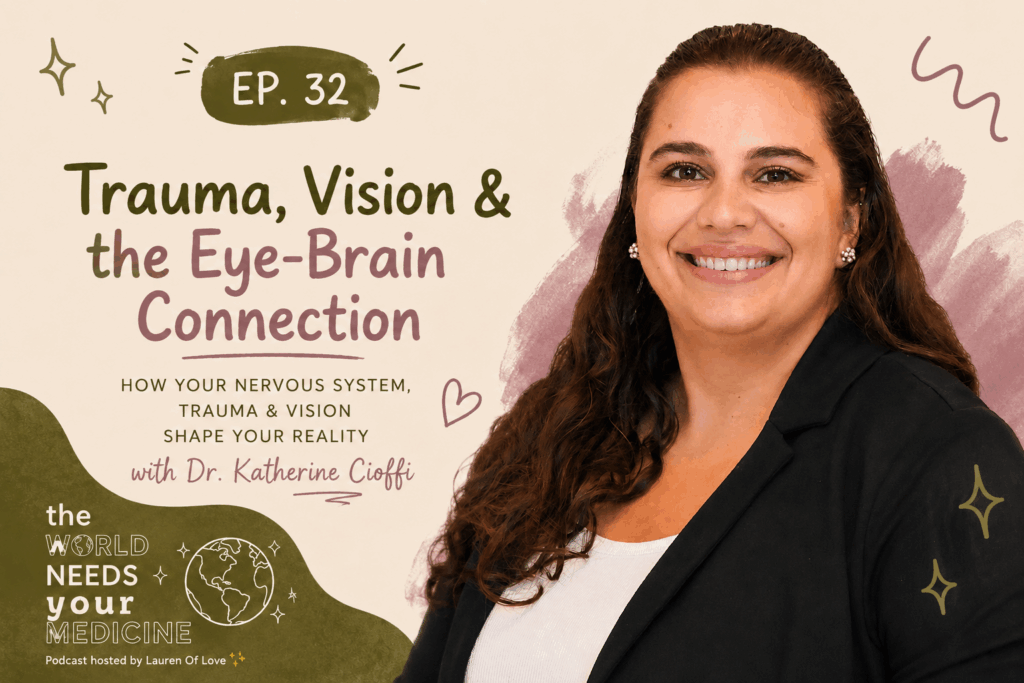
In this fascinating and deeply eye-opening conversation, Lauren sits down with optometrist and vision rehabilitation specialist Dr. Katherine Cioffi to explore the powerful connection between trauma, the brain, the nervous system, and vision.
Together, they unpack the difference between eyesight and vision, how stress and survival states impact our ability to focus, the relationship between ADHD symptoms and visual processing, and the ways our eyes can actually become a window into nervous system regulation.
This episode bridges neuroscience, trauma healing, somatics, nervous system work, and functional vision in a way that completely reframes how we think about focus, attention, anxiety, and even the way we physically perceive reality.
Eyesight vs Vision
One of the first distinctions Dr. Katherine makes in the episode is the difference between eyesight and vision.
Eyesight refers to clarity:
- reading letters on an eye chart
- seeing far away
- prescriptions and glasses
But vision is something much deeper.
Vision involves:
- tracking
- focusing
- eye teaming
- visual processing
- attention
- brain function
- nervous system regulation
As Dr. Katherine explains, vision is ultimately a brain process.
And when the nervous system becomes dysregulated through stress, trauma, inflammation, concussion, Lyme disease, burnout, or chronic overwhelm, it can directly affect how we process visual information.
Which means:
sometimes the issue is not just the eyes themselves.
It’s the nervous system underneath them.
ADHD, Focus & Visual Processing
One of the most powerful parts of the conversation explores the overlap between ADHD symptoms and vision dysfunction.
Dr. Katherine explains that symptoms often associated with ADHD can actually be connected to:
- poor eye tracking
- inability to sustain focus
- visual fatigue
- eye teaming issues
- difficulty processing information visually
Which raises an important question:
If we cannot focus our eyes… how can we focus our minds?
This part of the conversation deeply resonated with Lauren, especially around experiences of screen fatigue, cognitive overload, nervous system exhaustion, and the inability to sustain attention during periods of burnout and chronic stress.
The episode highlights how important it is to assess the visual system as part of understanding nervous system health.
Trauma Changes the Way We See
One of the most fascinating concepts explored in the episode is how trauma directly impacts the visual system.
When the nervous system enters fight-or-flight mode, the body shifts into survival:
- pupils dilate
- peripheral vision narrows
- focus changes
- the brain scans for danger
Dr. Katherine explains that this “tunnel vision” response may have once helped humans survive threats in nature, but in modern life, chronic stress can leave people stuck in this hypervigilant state for years.
This affects:
- focus
- clarity
- processing
- concentration
- emotional regulation
- cognitive function
And for many people, they may not even realize their nervous system is influencing the way they physically see the world.
Lauren and Dr. Katherine also explore the relationship between:
- bilateral stimulation
- EMDR
- peripheral vision
- nervous system regulation
- somatic healing
- visual exercises
showing how deeply connected the body, brain, and visual system truly are.
The Eyes as a Window Into the Nervous System
One of the most compelling takeaways from the conversation is the idea that the eyes may actually be one of the most accessible windows into nervous system function.
Dr. Katherine shares how vision therapy and eye-brain rehabilitation can help:
- regulate stress responses
- improve focus
- support recovery after trauma
- reduce visual fatigue
- improve cognitive performance
- restore nervous system flexibility
She also shares simple practices listeners can immediately implement, including:
- the 20-20-20 rule for screen use
- peripheral awareness exercises
- near/far focus exercises
- nervous system regulation through visual awareness
The conversation ultimately becomes a much larger reflection on embodiment, regulation, healing, and the profound intelligence of the human body.
Connect with Dr. Katherine Cioffi
Explore the program here: https://www.screenfit.com/
use code OFLOVE for a discount
Connect with Lauren
Body of Wealth Program:
https://laurenoflove.com/bow
Retreats with Lauren:
https://laurenoflove.com/retreats
The App:
https://laurenoflove.com/app
Instagram — @laurenoflove:
https://www.instagram.com/laurenoflove/
Instagram — @recodingwealth:
https://www.instagram.com/recodingwealth/
The World Needs Your Medicine Podcast Instagram:
https://www.instagram.com/theworldneedsyourmedicine
Website:
https://www.theworldneedsyourmedicine.com
All inquiries:
press@laurenoflove.com

get my free SIX LAWS OF
WEALTH AUDIO TRAINING


Hello Beautiful!
I'M LAUREN!
I transformed my life through healing, inner work and money magnetism. I've dedicated my work to helping the old version of me find her alignment to manifest a dream life and relationship with herself. And if you're here, I'm so happy!


